Credits
Sky Unveiled, by Meridian Field.
The sky in Sky Unveiled is built from the work of many astronomers, observatories, photographers and open
projects. Thank you to all of them.
The Milky Way
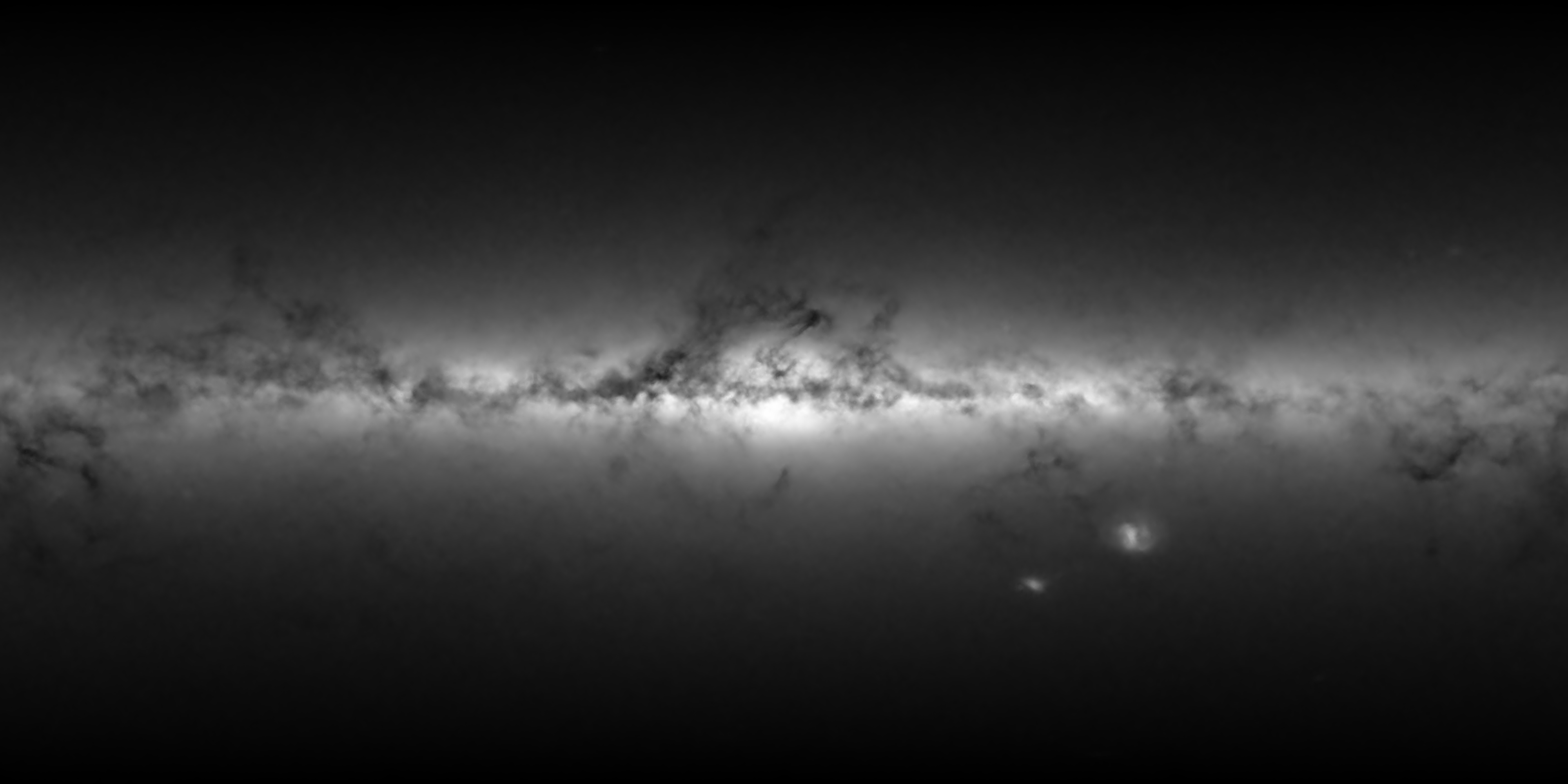
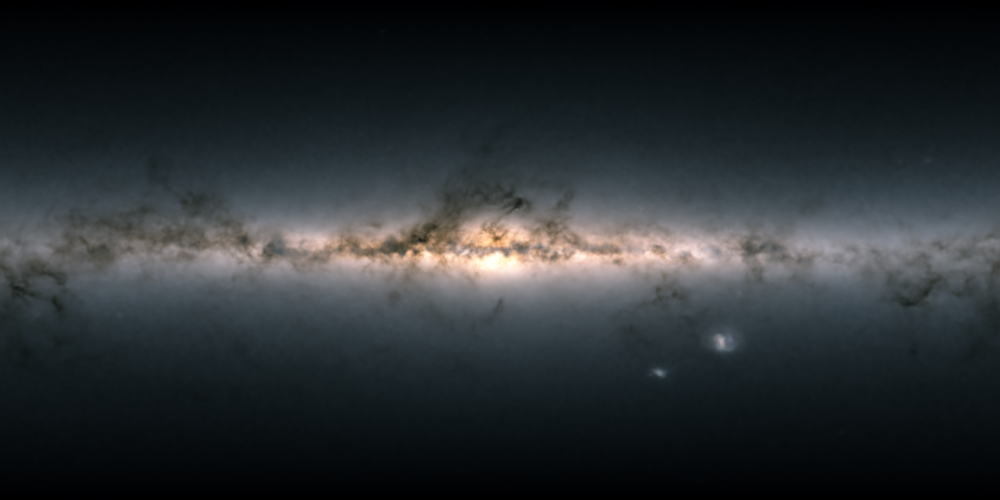
Milky Way adapted from 'The colour of the sky from Gaia's Early Data Release 3' by ESA/Gaia/DPAC (acknowledgement:
A. Moitinho), CC BY-SA 3.0 IGO.
Source,
licence.
We processed the map for the app: the stars and the fine grain removed, the colour smoothed and stored smaller.
Our processed files are available under the same licence, CC BY-SA 3.0 IGO:
brightness.png,
colour.png and
milkyway.json, with
notes on every change.
The Milky Way shown in the app's screenshots and trailer on the Meta Horizon Store is under the same licence,
CC BY-SA 3.0 IGO.
Stars
-
Stars, star names and constellation lines from
d3-celestial by Olaf Frohn (BSD 3-Clause licence). Its star
data comes from the XHIP compilation (Anderson and Francis 2012), built on ESA's Hipparcos mission. Credit:
ESA.
-
Fainter stars in the binocular and telescope views: UCAC4 (Zacharias et al. 2013, AJ 145, 44) and 2MASS.
This publication makes use of data products from the Two Micron All Sky Survey, which is a joint project of the
University of Massachusetts and the Infrared Processing and Analysis Center/California Institute of
Technology, funded by the National Aeronautics and Space Administration and the National Science Foundation.
-
This research has made use of the NASA/IPAC Infrared Science Archive, which is funded by the National
Aeronautics and Space Administration and operated by the California Institute of Technology.
- Colours from Pecaut and Mamajek 2013 (ApJS 208, 9).
Deep-sky objects
-
Deep-sky data adapted from OpenNGC by Mattia Verga, CC BY-SA 4.0
(OpenNGC,
licence). We selected the objects and checked
the data. Our adapted files are available under the same licence, CC BY-SA 4.0:
deepsky.json and
deepsky-provenance.tsv, with
notes on their sources.
-
CDS/SIMBAD: This research has made use of the SIMBAD database, operated at CDS, Strasbourg, France.
-
This research has made use of the Washington Double Star Catalog maintained at the U.S. Naval Observatory.
- Positions of some faint carbon stars: USNO-B1.0 (Monet et al. 2003).
-
Globular cluster distances and some magnitudes from W. E. Harris, Catalog of Parameters for Milky Way Globular
Clusters (2010 edition), physics.mcmaster.ca/~harris/mwgc.dat.
- Distances and names from Wikidata (CC0).
-
This research has made use of the NASA/IPAC Extragalactic Database (NED), which is operated by the Jet
Propulsion Laboratory, California Institute of Technology, under contract with the National Aeronautics and
Space Administration.
-
We acknowledge the usage of the HyperLeda database (http://leda.univ-lyon1.fr). Makarov et al. 2014, A&A,
570, A13.
-
This research has made use of data and/or software provided by the High Energy Astrophysics Science Archive
Research Center (HEASARC), which is a service of the Astrophysics Science Division at NASA/GSFC.
The Moon and the planets
Planet and Moon maps: Solar System Scope (solarsystemscope.com), CC BY 4.0, based on NASA elevation and imagery
data (licence).
Places
Contains data from GeoNames (geonames.org), licensed under CC BY 4.0
(licence).
Photos
The photos in the binocular and telescope views, each shown unchanged apart from its size. Photos from
ESA/Hubble, ESO, NOIRLab and Wikimedia Commons authors, each under its own licence:
Sounds and the meadow
- Sounds by Nox_Sound, Sheyvan, Breviceps, richwise and Tonmeister88 on Freesound (CC0).
- Ground texture from Poly Haven (CC0).